Share:
Corteva Agriscience is unifying its regionally focused seed brands under the Hoegemeyer® brand name. This transition strengthens our position as a reliable seed supplier, supports long-term brand growth and increases operational efficiency to scale and better meet growers’ needs today and in the future. While this is a change for our customers, the benefits they enjoy today working with our regional dealer service model brands will remain the same: access to high-performing genetics through locally proven products, trusted relationships and personalized service. Dairylandseed.com will no longer be available after June 30, 2026.
Learn more about Hoegemeyer.

12/22/2025
Soybean Inoculants
By Dairyland Seed Agronomy Team
As we continue looking at preparing for the 2026 cropping season and deciding which practices or products to use to increase our operations yield and ROI, I always think about using soybean inoculants for our soybean crop. Listed below are reasons or situations as to why we should use a soybean inoculant.
Virgin soil that has never grown soybeans or other legumes lack natural or established populations of the soil bacteria Bradyrhizobia japonicum to support nodulation and nitrogen fixation.
Soil History: If the field has not had soybeans for the last three years, natural population of Bradyrizobim japonicum might not be at a high enough rate to support nodulation.
Low Organic Matter (less than 1%): In almost all instances, soils with less than 1% organic matter have poor microbial activity that would not be ideal for the continuation of rhizobia to support nodulation.
Erosion: Heavy soil erosion takes or strips away topsoil and beneficial microbes including rhizobia.
Soil pH: Soil pH below 5.8 and above 8 reduce rhizobia survival and activity. In my experience I have seen visual evidence of the effects of adding inoculants when pH is below 6.5 or above 7.5.
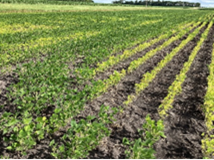
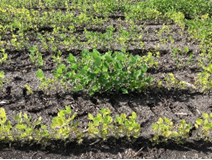
High Residual Soil Nitrates: When you have high levels of soil nitrates in the soil due to reduced corn yield not using available nitrogen or heavy amounts of soil mineralization that was utilized by the previous crop, you suppress the formation nodules in soybean plants. This can be expressed by yellow plants, especially in high pH soils.
 |  |
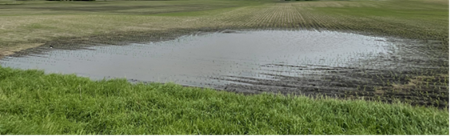
Drought or flood or water ponding conditions: Severe drought or standing water/ flooding significantly reduces microbial populations due to needing water when soils are droughty and needing oxygen when soil are flooded or having standing water on them for more than 5-7 days.
High soil temperatures: When soil temperatures start getting into the 90°F and above and maintain or increase this temperature 10-14 days or more, you start to make that portion of the soil profile less inviting for bacteria to survive.
Compacted Soils: When soils are compacted, they tend to be more droughty. When it rains, water tends to pond in these compacted areas. These conditions as stated previously do reduce the soil bacteria Bradyrhizobia japonicum.
It seems as though we have fields or portions of fields, that always seem to have conditions that warrant the use of a soybean inoculant. Putting soybean inoculants on your soybean seed is an effective way to ensure that you have a high yielding soybean that is healthy during the growing season.
Subscribe for more insights delivered straight to your inbox.
 Brian Weller |  Dan Ritter |  Chad Staudinger |  Mark Gibson |  Amanda Goffnett |  Ryan Mueller |