Share:
Corteva Agriscience is unifying its regionally focused seed brands under the Hoegemeyer® brand name. This transition strengthens our position as a reliable seed supplier, supports long-term brand growth and increases operational efficiency to scale and better meet growers’ needs today and in the future. While this is a change for our customers, the benefits they enjoy today working with our regional dealer service model brands will remain the same: access to high-performing genetics through locally proven products, trusted relationships and personalized service. Dairylandseed.com will no longer be available after June 30, 2026.
Learn more about Hoegemeyer.

7/2/2025
Rapid Growth Syndrome
By Dairyland Seed Agronomy Team
As we moved into the heart of the growing season, several agronomists and growers began reporting instances of rapid growth syndrome (RGS) in early vegetative corn. Curious to learn more, Beau Shultz, Dairyland Seed’s high school agronomy research intern, took the initiative to investigate after observing signs of RGS in some of our research plots. Here’s what her research uncovered.
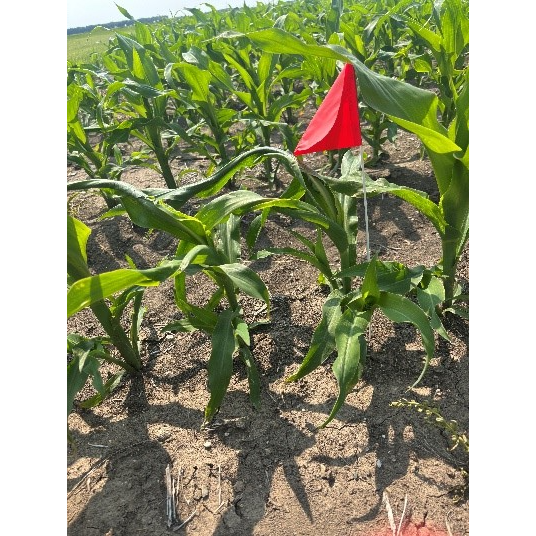
While not a disease or a true pest threat, RGS can result in significant cosmetic damage and crop unevenness raising concern in otherwise healthy fields. Rapid Growth Syndrome is a physiological condition in corn, often observed during the V5 to V8 stages, characterized by twisted, crinkled, or rolled upper leaves. These symptoms are caused by rapid elongation of the stalk, which forces tightly wrapped leaf whorls to expand before they are ready, resulting in physical distortion
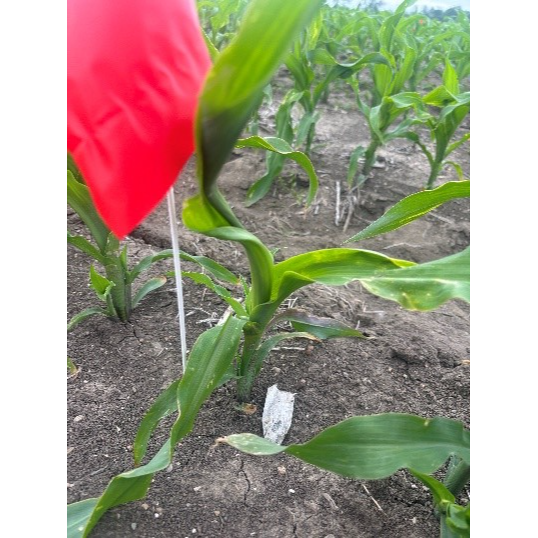
The causes of RGS are cool, cloudy weather followed by a sudden increase in heat and sunlight, ample soil moisture supporting a surge in vegetative growth, and genetic predisposition with some hybrids more susceptible than others. Symptoms of RGS include rolled upper leaves, yellowing of the whorl where trapped leaves are exposed, and in extreme cases full canopy twisting. Despite the dramatic appearance the stalks often recover fully within 5 to 10 days.
There is no treatment or product that reverses RGS but growers can take comfort that it does not impact yield potential in most cases. Plants usually recover quickly as new leaves emerge. Rapid growth syndrome can be alarming at first glance but rest assured, it’s a temporary condition. With the right genetics and agronomic planning your crop will power through and perform to its full potential.
Subscribe for more insights delivered straight to your inbox.
 Brian Weller |  Dan Ritter |  Chad Staudinger |  Mark Gibson |  Amanda Goffnett |  Ryan Mueller |